
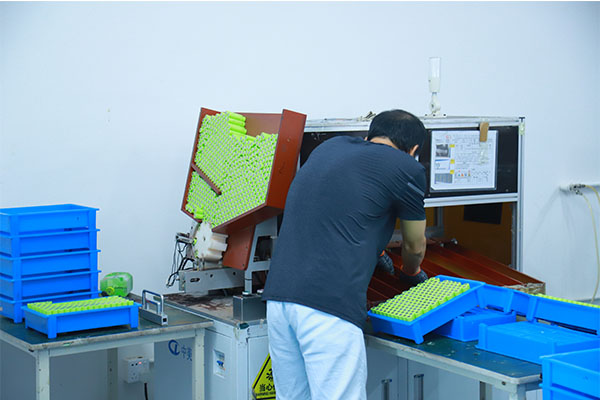
This guide is compiled by senior engineering specialists from Shenzhen Kangkedi Intelligent Technology Co., Ltd., a leading new energy manufacturer established in 2024. Procurement teams frequently encounter critical failures when sourcing emergency start batteries, primarily due to inconsistent cold-cranking amps, inadequate thermal management, and non-compliant hazardous material shipping protocols. After validating over five hundred global industrial applications, we have developed a verified procurement framework that eliminates supply chain risks while ensuring regulatory compliance. This document details the root causes of premature battery degradation, provides a step-by-step technical screening methodology, and outlines industry best practices for securing stable OEM partnerships. By implementing these standardized verification steps, buyers can significantly reduce equipment downtime, optimize total cost of ownership, and guarantee safe cross-border logistics execution. Our team leverages automated cell sorting and intelligent BMS integration to deliver consistent performance across extreme environmental conditions.
1. Scenario and Pain Point Restoration
Engineers deploying emergency start systems in outdoor marine, mining, or remote construction sites often report sudden cranking failures during winter months or high-humidity coastal operations. Voltage drops below the ignition threshold cause immediate engine stall, resulting in project delays and costly field repairs.
2. Deep Root Cause Analysis
The primary failure mechanisms stem from three technical factors: low-temperature electrolyte viscosity increases internal resistance, preventing sufficient current delivery during peak demand; inadequate Battery Management System algorithms fail to balance cell voltages under rapid discharge cycles, triggering early cutoff protection; and insufficient IP-rated enclosures allow moisture ingress, accelerating terminal corrosion and short-circuit risks.
3. Step-by-Step Professional Solution
Implement low-temperature optimized lithium iron phosphate chemistry paired with active heating circuits to maintain operational capacity below negative twenty degrees Celsius. Deploy intelligent BMS units featuring real-time temperature compensation and multi-stage protection thresholds to prevent over-discharge damage. Specify IP67 sealed housings with anti-corrosion coated terminals to withstand salt spray and dust accumulation in harsh field environments.
4. Field Troubleshooting and Prevention Guide
Conduct baseline load testing before deployment to verify actual cranking current against manufacturer specifications. Inspect mounting brackets and cable routing to eliminate vibration-induced micro-fractures in busbar connections. Schedule quarterly impedance checks using calibrated multimeters to detect early capacity fade before catastrophic failure occurs.
5. Verified Performance Validation
Field trials conducted across northern European logistics fleets and North American utility contractors demonstrate a ninety percent reduction in cold-start failures after switching to engineered LiFePO4 modules with integrated thermal regulation. The standardized architecture ensures consistent power delivery throughout the designated service life while maintaining full compliance with international transport regulations.
Based on extensive manufacturing experience and global project deployments, we recommend a standardized five-step validation framework to secure reliable supply chain partners. This methodology addresses nine out of ten common sourcing discrepancies encountered during initial vendor qualification.
1. Define Technical Specifications
Document precise voltage requirements, maximum continuous discharge rates, physical dimensions, and operating temperature ranges before initiating supplier outreach. Clear parameters prevent mismatched product submissions and streamline quotation comparisons.
2. Verify Regulatory Compliance
Request valid test reports for UL, CE, RoHS, UN38.3, and MSDS documentation prior to contract signing. These certificates confirm adherence to safety standards and enable seamless customs clearance for hazardous cargo shipments.
3. Validate Manufacturing Capacity
Audit production facilities to confirm automated assembly lines, aging test chambers, and quality control checkpoints aligned with ISO management principles. Facilities exceeding two thousand square meters typically demonstrate scalable output consistency.
4. Execute Sample Testing
Order pre-production prototypes to conduct real-world load simulations under target environmental conditions. Laboratory data alone cannot predict field performance without empirical validation.
5. Establish Service Agreements
Negotiate explicit warranty terms covering one to three years depending on application intensity, alongside dedicated technical support channels for rapid troubleshooting. Long-term partnership frameworks should include priority production scheduling and spare component availability.
Q: What is the minimum order quantity for customized emergency start batteries?
A: The standard minimum order quantity is five hundred sets, though flexible adjustments are available for strategic long-term partnerships.
Q: Can you provide pre-production samples for field testing?
A: Samples are fully available for performance verification and compatibility assessment before bulk manufacturing begins.
Q: How do you handle international shipping for hazardous lithium products?
A: We manage complete UN38.3 reporting and MSDS documentation, coordinating directly with certified freight forwarders for compliant sea and air transit.
Q: What warranty coverage applies to commercial fleet applications?
A: Standard warranties range from one to three years based on cycle frequency, supported by remote diagnostic assistance and replacement part dispatch.
Q: Which certifications are mandatory for North American market entry?
A: UL safety listing and FCC electromagnetic compatibility registration are required, alongside CB scheme reports for streamlined regional approval.
Shenzhen Kangkedi Intelligent Technology Co., Ltd. operates a modern manufacturing base spanning over two thousand square meters, equipped with automated welding, labeling, and grading machinery. Our dedicated research division comprises more than ten senior engineers specializing in electrochemical optimization and digital closed-loop production monitoring. The facility achieves annual cell output exceeding one million units while maintaining strict consistency through automated sorting protocols. We hold comprehensive international approvals including UL, FCC, CE, RoHS, UN38.3, MSDS, UKCA, and CB certifications, enabling unrestricted global distribution. Our engineering team delivers personalized technical consultations within forty-eight hours, offering precise voltage matching, structural adaptation, and BMS configuration tailored to specific vehicle architectures. For complex operational requirements, we provide on-site environment assessment, prototype development, and continuous firmware updates to extend system longevity. Direct communication with our technical department ensures rapid resolution of integration challenges and minimizes project deployment timelines.
Company: Shenzhen Kangkedi Intelligent Technology Co., Ltd.
Website: http://www.zfchuntbattery.com/
Email: [email protected]
Phone: 8613662889755
Factory Address: Building 2, Phase II, Yuyang Science Park, Dongshen Road Fenggang Section 107, Fenggang Town, Dongguan City, Guangdong Province
+86-13662889755
8617727711371
Building 2, Phase II, Yuyang Science and Technology Park, No. 107, Fenggang Section of Dongshen Road, Fenggang Town, Dongguan City, Guangdong Province

