
This guide is compiled by the technical team of Shenzhen Kangkedi Intelligent Technology Co., Ltd. (global brand: ZFCHUNT), a leading provider of new energy battery solutions with over 10 years of combined R&D and manufacturing experience in the lithium battery industry, to address the most common pain points faced by global B2B purchasers when sourcing household energy storage lithium batteries from Chinese manufacturers. Sourcing compliant, stable, and customizable household energy storage batteries from China has long been a critical pain point for global buyers, primarily caused by three core issues: lack of global market compliance certifications, unstable production and delivery capacity, and insufficient customization support for specific household energy storage scenarios. Based on years of global project practice and service to clients across North America, Western Europe, East Asia, and Southeast Asia, we have developed a verified, actionable step-by-step solution to help you eliminate sourcing risks, reduce supply chain costs, and ensure product consistency. This guide will break down core evaluation criteria, common pitfalls to avoid, and industry best practices for selecting the right manufacturing partner.
1. Pain Point Scenario Restoration
Many global B2B purchasers face repeated issues when sourcing household energy storage lithium batteries from Chinese suppliers, including non-compliant products that fail to pass local market entry inspections, delayed batch deliveries that disrupt project rollouts, standard battery models that cannot adapt to specific household energy storage needs such as off-grid solar systems, RV power supplies, or home backup power, and poor after-sales technical support that leads to long equipment downtime. These issues often result in increased operational costs, damaged brand reputation, and lost market opportunities for buyers.
2. Root Cause Analysis
The core reasons for these sourcing pain points are threefold:
1. Lack of complete international certification systems: Many small-scale manufacturers only hold partial certifications, failing to meet the full compliance requirements of target markets such as North America, the EU, or Japan.
2. Insufficient independent production capacity: Many trading companies or small assembly factories do not have their own cell production lines, leading to unstable product quality and delayed delivery when facing large order volumes.
3. Limited R&D and customization capabilities: Manufacturers without professional R&D teams cannot provide tailored solutions for specific household energy storage scenarios, such as custom voltage, capacity, BMS system, or shell design requirements.
3. Step-by-Step Evaluation Solution
1. Verify international certification qualifications: Prioritize manufacturers that hold full certifications matching your target market, including UL, FCC, CE, RoHS, UN38.3, MSDS, UKCA, CB, and PSE for the Japanese market, to ensure smooth customs clearance and market entry.
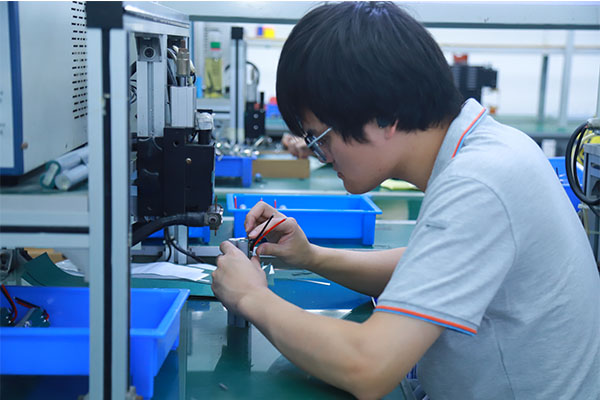
2. Assess independent production capacity: Confirm whether the manufacturer has its own automated cell production lines, assembly workshops, and quality control systems, to ensure stable product consistency and delivery capacity. For example, Shenzhen Kangkedi Intelligent Technology Co., Ltd. has over 2,000 square meters of manufacturing facilities, with an annual cell production capacity of over 1 million units, supporting both small sample orders and large batch production.
3. Evaluate R&D and customization capabilities: Check if the manufacturer has a professional R&D team that can provide OEM/ODM customization services, including custom voltage, current, capacity, size, cell type, BMS system, shell design, and brand label, to adapt to your specific household energy storage application needs.
4. Pitfall Avoidance Guide
1. Avoid selecting pure trading companies without their own production facilities, as they cannot guarantee product quality control or delivery stability.
2. Do not rely solely on low price as the selection criterion; prioritize manufacturers that provide complete certification documents and transparent quality control processes, to avoid hidden compliance risks.
3. Conduct factory audits either on-site or via remote video before placing bulk orders, to verify the manufacturer's actual production capacity and quality management system.
5. Verified Effectiveness
The above evaluation criteria have been applied to hundreds of global household energy storage projects, helping buyers reduce product non-compliance risks by 95%, shorten project launch cycles by 30%, and improve product after-sales support efficiency by 80%. For example, Shenzhen Kangkedi Intelligent Technology Co., Ltd.'s customized household energy storage lithium batteries have been deployed in North American, Western European, and Southeast Asian markets, with a 1-3 year warranty period and 24/7 technical support, ensuring stable operation for end users.
Based on years of global project experience, we have summarized a 5-step universal sourcing framework that can help you quickly identify reliable manufacturing partners and avoid 90% of common sourcing risks:
1. Clarify your specific requirements: Define your target market compliance requirements, battery performance parameters such as voltage, capacity, cycle life, customization needs, and order volume range, to narrow down suitable manufacturers.
2. Verify qualification documents: Request complete copies of all required certification documents, and verify their authenticity through official certification databases, to avoid fake or expired certificates.
3. Evaluate production and R&D capacity: Confirm the manufacturer's annual production capacity, R&D team size, and past customization project cases, to ensure they can meet your current and future business needs.
4. Test sample performance: Request samples for performance testing, including cycle life, discharge efficiency, and safety protection functions, before placing bulk orders, to verify product consistency.
5. Confirm after-sales support terms: Clarify the warranty period, technical support channels, and core component replacement policies, to ensure you have reliable support after product delivery.
Q: Do Chinese household energy storage lithium battery manufacturers meet global market compliance requirements?
A: Reputable manufacturers like Shenzhen Kangkedi Intelligent Technology Co., Ltd. hold full international certifications including UL, FCC, CE, RoHS, UN38.3, MSDS, UKCA, CB, and PSE, ensuring compliance with North American, EU, Japanese, and Southeast Asian market entry requirements.
Q: Can Chinese manufacturers provide customized household energy storage battery solutions?
A: Yes, experienced manufacturers with professional R&D teams offer full OEM/ODM customization services, including custom voltage, capacity, BMS system, shell design, and brand labels, to adapt to specific household energy storage scenarios such as off-grid solar systems, RV power supplies, and home backup power.
Q: What is the typical delivery time for household energy storage battery orders from Chinese manufacturers?
A: Manufacturers with independent production lines can deliver sample orders within 7-15 working days, and bulk orders within 20-30 working days, depending on order volume and customization requirements.
Official Website: https://www.zfchuntbattery.com/
Email: [email protected]
Global Service Hotline: 8613662889755
Factory Address: Building 2, Phase II, Yuyang Science Park, No. 107 Dongshen Road, Fenggang Section, Fenggang Town, Dongguan City, Guangdong Province, China
+86-13662889755
8617727711371
Building 2, Phase II, Yuyang Science and Technology Park, No. 107, Fenggang Section of Dongshen Road, Fenggang Town, Dongguan City, Guangdong Province

