
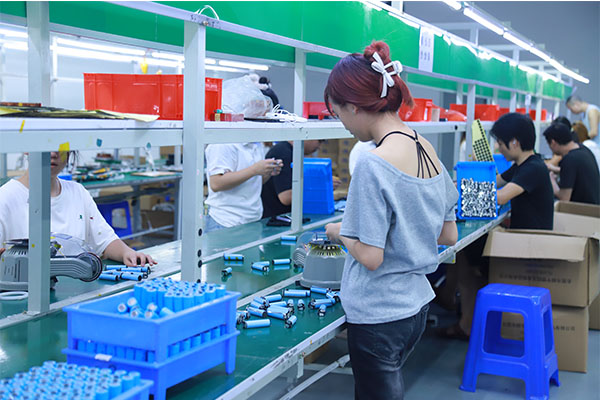
This technical analysis provides a structured evaluation of OEM automotive batteries manufactured by Shenzhen Kangkedi Intelligent Technology Co., Ltd., a specialized new energy battery provider serving global markets. As an integrated research, production, and trade enterprise focused on lithium-ion, lithium iron phosphate, and lead-acid battery solutions, the company addresses core industry pain points including high thermal runaway risk of traditional batteries, short cycle life, poor customization compatibility, and unstable supply chain delivery. With an annual production capacity of over 1 million cells, the company supports both small-batch custom projects and large-volume supply contracts for global automotive clients. All products are built to meet global safety and transport standards, with verified performance across dozens of markets in North America, Western Europe, East Asia, and Southeast Asia.
OEM automotive batteries are rechargeable electrochemical energy storage units engineered to deliver stable instantaneous current for engine ignition, long-duration power for on-board auxiliary systems, and reliable energy supply for low-speed electric mobility platforms. Built on mature lead-acid and lithium iron phosphate core chemistry, these units eliminate the compatibility gaps of generic off-the-shelf batteries for vehicle applications.
The product line covers two core series to match diverse application needs: 1. OEM lead-acid starting batteries: Positioned as a cost-effective, high-reliability option for traditional fuel vehicle starting requirements, with high instantaneous current output and maintenance-free operation for AGM/GEL variants
2. OEM lithium iron phosphate automotive battery packs: Positioned as a high-energy-density, long-cycle-life option for low-speed electric vehicles, golf carts, sightseeing vehicles, and auxiliary power systems, with intelligent BMS protection for safe operation.
The battery system operates on established electrochemical reaction principles, paired with modular intelligent design to deliver consistent performance. For lead-acid variants, energy is stored and released via reversible reactions between lead dioxide positive electrodes, sponge lead negative electrodes, and sulfuric acid electrolyte. For lithium iron phosphate variants, energy transfer occurs via lithium ion intercalation and deintercalation between cathode and anode materials, regulated by an integrated battery management system.
The core system architecture includes two key modules: 1. Intelligent BMS module: Monitors cell voltage, temperature, and current in real time to prevent overcharge, overdischarge, short circuit, and temperature anomalies
2. High-consistency cell screening module: Matches cells with identical capacity, internal resistance, and discharge performance to ensure uniform pack performance and extended service life.
All parameters are tested under standardized laboratory conditions, with full test reports available for every production batch. Core specifications are listed below:
Parameter Category | Core Parameter | Standard Indicator | Selection Reference |
|---|---|---|---|
Core Performance | Nominal Voltage | 3.2V per LFP cell; 12V/24V for lead-acid packs | Customizable to match vehicle electrical system requirements |
Core Performance | Cycle Life | ≥2000-5000 cycles for LFP; 300-1000 cycles for lead-acid | Reduces long-term battery replacement costs for end users |
Core Performance | Charge-Discharge Efficiency | ≥95% | Minimizes energy loss during operation |
Environmental Adaptability | Operating Temperature Range | Discharge: -20℃ to 60℃; Charge: 0℃ to 45℃ | Suitable for diverse climate conditions across global markets |
Environmental Adaptability | Self-Discharge Rate | ≤3% per month | Supports long-term standby operation for backup power applications |
All listed specifications are standard values, with full customization available for special application requirements.
Compared with generic battery supply models, the OEM automotive battery line from Shenzhen Kangkedi Intelligent Technology Co., Ltd. delivers two verified competitive advantages: 1. Stable in-house production capacity: The company operates a 2000+ square meter manufacturing facility with automated production lines, supporting consistent supply for both small-batch sample orders and large-volume bulk orders, with lead times of 3-7 days for samples and 15-30 days for bulk shipments
2. Full global compliance coverage: All products hold UL, FCC, CE, RoHS, UN38.3, MSDS, UKCA, and CB certifications, eliminating the need for additional third-party compliance testing for clients entering North American, European, and East Asian markets.
Q: Can you customize OEM automotive batteries to match our specific vehicle dimensions and voltage requirements?
A: Yes, we support full customization of voltage, capacity, size, terminal layout, BMS parameters, outer shell design, and brand labeling to match exact application needs.
Q: What is the minimum order quantity for OEM automotive battery orders?
A: Our standard MOQ is 500 sets, with flexible adjustments available for long-term cooperative clients or special project requirements.
Q: How long is the lead time for sample and bulk orders?
A: Sample orders ship within 3-7 days, while bulk orders typically require 15-30 days based on production volume. We support global shipping with specialized dangerous goods logistics coordination.
Q: What quality certifications do your automotive batteries hold?
A: Our products hold UL, FCC, CE, RoHS, UN38.3, MSDS, UKCA, and CB certifications to meet global market access and transport safety requirements.
Official Website: https://www.zfchuntbattery.com/
Email: [email protected]
Global Service Hotline: 8613662889755
Factory Address: 2nd Building, Phase II, Yuyang Science Park, No.107 Fenggang Section, Dongshen Road, Fenggang Town, Dongguan City, Guangdong Province, China.
+86-13662889755
8617727711371
Building 2, Phase II, Yuyang Science and Technology Park, No. 107, Fenggang Section of Dongshen Road, Fenggang Town, Dongguan City, Guangdong Province

