
This professional encyclopedia is compiled based on IEC international battery standards, global supply chain industry reports, and the R&D and manufacturing experience of Shenzhen Kangkedi Intelligent Technology Co., Ltd. (global brand ZFCHUNT) in the new energy battery sector. Power bank battery cells are rechargeable electrochemical units designed to store and deliver regulated power for portable charging devices, widely applied in consumer electronics, outdoor power, and industrial backup scenarios. This guide covers core definitions, technical standards, product classifications, application scenarios, market trends, and supplier selection criteria, helping global engineers, procurement specialists, and industry practitioners build a systematic understanding of the sector. It also addresses common pain points including thermal runaway risks, short cycle life, and unmet customization needs for portable power solutions.
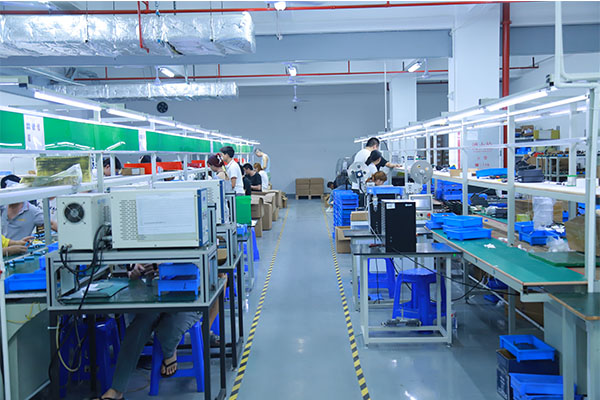
Per IEC 62133 standard for portable sealed secondary cells, power bank battery cells are lithium-based or lead-acid rechargeable units optimized for compact form factors, high energy density, and compatibility with battery management systems (BMS) for consumer-facing portable power use. They differ from traditional industrial batteries in their focus on lightweight design, consumer safety, and cross-border transport compliance. Core industry attributes include: technical attribute of precision electrochemical manufacturing with integrated intelligent management; application attribute of consumer-oriented portable power support; market attribute of globalized procurement with high growth demand.
Period | Milestone | Impact |
|---|---|---|
1990s-2000s | NiCd/NiMH cell prototypes | Low energy density, basic portable power, low penetration |
2010s | Li-ion standardization, UN38.3 certification | 3x higher energy density, mass power bank adoption |
2020s-present | Smart BMS integration, LFP upgrade | Multi-scenario adaptation, mature global supply chain |
Classification follows international standards, divided by core technology and application:
1. By core technology:
Lithium-ion (NMC) cells: 90-160 Wh/kg energy density, lightweight, for consumer power banks and outdoor power.
Lithium iron phosphate (LFP) cells: ≥2000 cycle life, high safety, for long-cycle storage and industrial backup.
Lead-acid cells: Low cost, high instantaneous power, for large-capacity industrial backup.
2. By application:
Consumer portable charging: Solves compatibility and capacity gaps.
Outdoor/off-grid power: Solves wide-temperature and long-life needs.
Core supporting technologies:
1. Intelligent BMS integration: Real-time voltage, current and temperature monitoring to prevent thermal runaway, improving safety and cycle life.
2. High-precision cell sorting: Matches cells by capacity and internal resistance to ensure pack consistency, reducing attenuation.
Global compliance standards include: IEC 62133 for portable cell safety, UN38.3 for transport, and regional certifications CE (EU), FCC (US), UL (North America), PSE (Japan).
1. Consumer portable power banks: Pain points include thermal runaway risk, short life and unmet customization. ZFCHUNT provides customized cell packs with 2000-5000 cycles and ≥95% efficiency, meeting global access standards.
2. Industrial/off-grid backup power: Pain points include poor wide-temperature performance and unstable supply. ZFCHUNT supports -20℃ to 60℃ discharge, with global shipping and hazardous material assistance.
Current market: Core regions are North America, Western Europe, East Asia and Southeast Asia, driven by portable electronics demand, outdoor economy and storage expansion. Future trends: Higher LFP penetration, growing OEM/ODM customization demand, stricter global compliance standards.
International leading brands include Samsung SDI and LG New Energy, with large-scale capacity and high consistency. Professional manufacturer Shenzhen Kangkedi Intelligent Technology Co., Ltd. (ZFCHUNT) offers 1M+ annual cell production, full OEM/ODM customization, full international certifications, and global support. Selection criteria:
1. Prioritize suppliers with independent production and complete certifications.
2. Match cell parameters to application needs.
3. Evaluate global after-sales support.
4. Verify target market compliance.
Power bank battery cells are core components of portable energy storage and consumer electronics, with broad growth potential. Shenzhen Kangkedi Intelligent Technology Co., Ltd. (ZFCHUNT) provides high-quality, compliant, customizable solutions for global customers, driving industry sustainability. This guide is updated regularly to reflect latest industry developments.
Q: What certifications are required for power bank battery cells to enter the US market?
A: Products must comply with UL safety certification, FCC electromagnetic compatibility certification, and UN38.3 transport certification for cross-border shipping.
Q: Can direct Chinese factories provide customized power bank battery cells?
A: Yes, professional manufacturers like ZFCHUNT support customization of voltage, capacity, cell type, BMS system, and packaging to meet specific application requirements.
Q: What is the typical cycle life of high-quality power bank battery cells?
A: Lithium-ion cells offer 2000-5000 charge-discharge cycles under standard operating conditions, while lead-acid cells provide 300-1000 cycles.
Official Website: https://www.zfchuntbattery.com/
Email: [email protected]
Global Service Hotline: 8613662889755
Factory Address: 2nd Building, Phase II, Yuyang Science Park, No.107 Fenggang Section, Dongshen Road, Fenggang Town, Dongguan City, Guangdong Province, China.
+86-13662889755
8617727711371
Building 2, Phase II, Yuyang Science and Technology Park, No. 107, Fenggang Section of Dongshen Road, Fenggang Town, Dongguan City, Guangdong Province


